



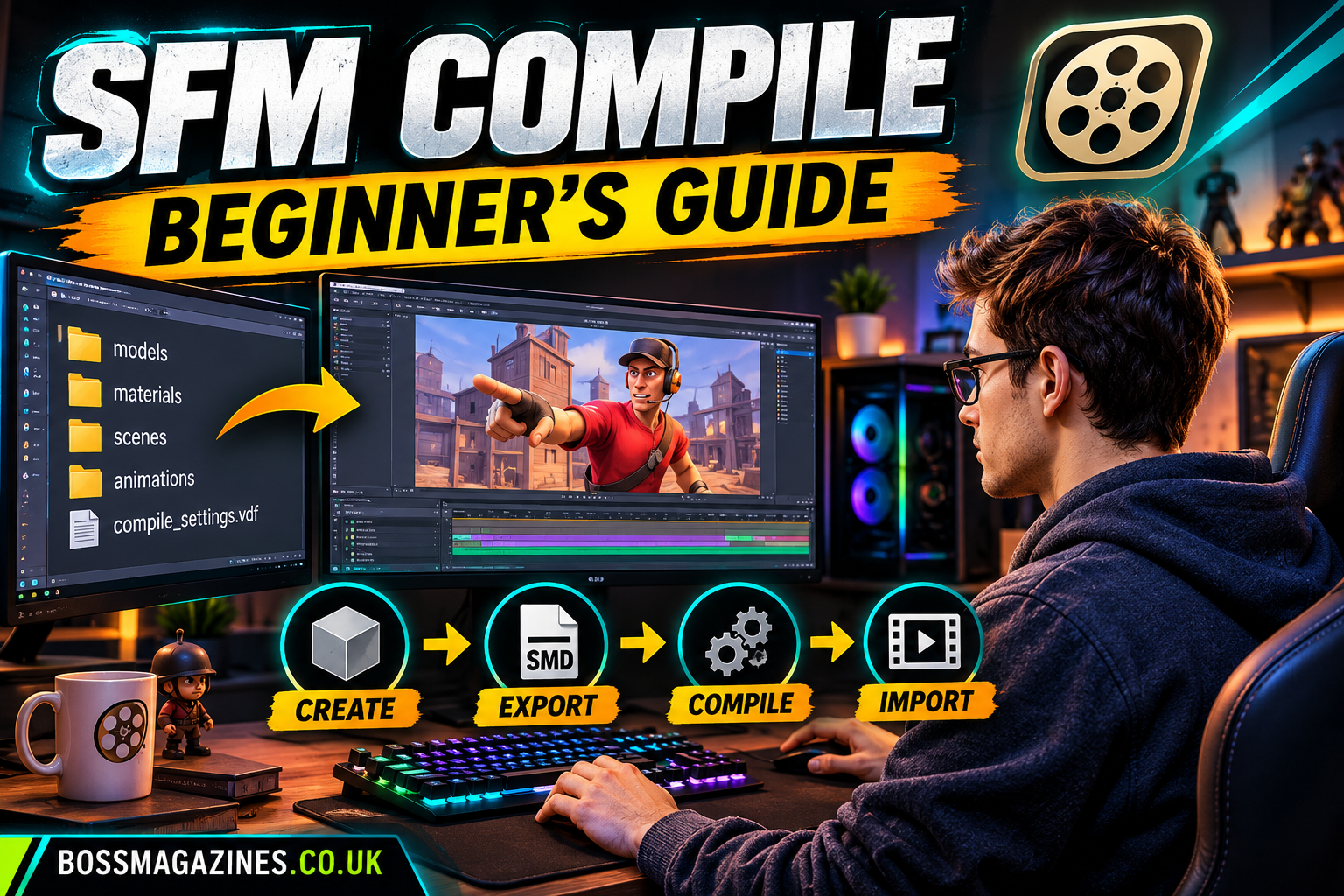
If you have searched for “SFM compile” (or the common misspelling “SFM complie”), you probably ran into one of two things. Some people use the phrase for compiling custom models, textures, and animations so they work inside Source Filmmaker. Others use it for compilation videos, which are collections of Source Filmmaker clips edited into one longer video.
Both meanings are common in the Source Filmmaker community, and they lead to very different results. This article explains each one in plain language, shows how the model compiling process works, and covers the safety points every viewer or creator should keep in mind. SFM Compile
Table of Contents
- What SFM Compile Means for Readers
- Why People Search for SFM Compile
- How Model Compiling Works in Source Filmmaker
- Tools Commonly Used for SFM Compiling
- Understanding SFM Compilation Videos
- Common SFM Compile Errors and Fixes
- Is SFM Compile Content Safe and Reliable?
- Tips for Getting Better Results
- Frequently Asked Questions
- Conclusion
What SFM Compile Means for Readers
Source Filmmaker, usually shortened to SFM Compile, is a free animation tool developed by Valve. It uses the same engine as games like Team Fortress 2 and Half-Life 2, which lets creators build scenes, pose characters, and render short films using game assets. Because it runs on the Source engine, it can only use assets in a specific format.
That is where the word “compile” comes in. Models and animations made in other programs, such as Blender, must be converted into the engine’s own format before SFM Compile can load them. This conversion is called compiling, and it is a core step for anyone who wants to bring custom characters, props, or maps into their scenes.
The second meaning is about content rather than technology. In online video communities, a “compile” or “compilation” is a video that gathers several clips into one. An SFM compile is therefore a collection of Source Filmmaker animations, often grouped by theme, character, or game. Knowing which meaning you need will save you a lot of confusing search results.
Why People Search for SFM Compile
Most people searching this keyword fall into three groups. The first group is new animators who downloaded a model from a community site and found it does not work in SFM Compile. They want to know how to compile it, or why their compile keeps failing.
The second group is viewers looking for compilation videos. They want to watch a collection of SFM Compile animations without searching for each clip separately. Some of these viewers are fans of a certain game or character, and some simply enjoy well-made animated shorts.
The third group is troubleshooters. They have already tried compiling something and hit an error message, a missing texture, or a model that appears as a purple-and-black checkerboard. Searching “SFM compile” with an error phrase is often their way of finding a fix. The misspelling “complie” most likely comes from this group, since people often type quickly when they are frustrated.
How Model Compiling Works in Source Filmmaker
At a basic level, compiling takes source files and turns them into files the Source engine understands. A typical model project includes a mesh, a skeleton, animations, and materials. The mesh and skeleton are usually exported from a 3D program as SMD or DMX files, and a text file called a QC file tells the compiler how to put everything together.
The QC file is the heart of the process. It lists the model name, the mesh files to use, the animation sequences, the material folders, and settings such as collision or bone behavior. The compiler reads this file and produces the final model files, which typically include MDL, VVD, and VTX files. Textures are handled separately and converted into VTF and VMT files, where VTF holds the image and VMT describes how the surface looks.
Once compiled, the files must go into the correct folder so SFM can find them. For Source Filmmaker, custom content normally goes into the “usermod” game folder inside the SFM installation. If the folder structure does not match the paths written in your QC and VMT files, the model may load without textures or not load at all. Paying attention to paths from the start prevents most beginner problems.
Tools Commonly Used for SFM Compiling
Most creators do not compile by typing commands by hand. A community-made tool called Crowbar is widely used because it offers a simple window for both decompiling existing models and compiling new ones. You point it at your QC file, choose the Source Filmmaker game setup, and press a button. It also shows the compiler’s log, which is the first place to look when something goes wrong.
Behind the scenes, the actual compiling is done by a Valve program called studiomdl. Crowbar simply runs it for you and presents the results more clearly. If you prefer the command line, you can run studiomdl yourself, but beginners usually find the graphical tool easier.
For creating the assets, many animators use Blender with a Source-format import and export add-on. For textures, tools like VTFEdit or similar converters turn standard images into the VTF format. Each of these tools has its own learning curve, so it helps to start with one small, simple prop before attempting a full character with dozens of bones.
Understanding SFM Compilation Videos
A compilation video is simply an edited collection of animations. Creators usually either gather their own work or collect clips by theme, such as comedy shorts, game parodies, or cinematic scenes. The better compilations are well organized, have clear titles, and credit the original animators.
Quality varies a lot. Some compilations are carefully edited showcases that help viewers discover talented creators. Others are reuploads of someone else’s work without permission, which is a problem for the artists who spent hours posing and rendering each frame. If you enjoy a clip, it is worth finding the original creator and supporting them directly.
One more point matters here. A significant share of Source Filmmaker content online is adult-oriented, and compilations in that category are often age-restricted on major platforms. If you are searching for general animation, use specific terms like the game name or “SFM short film” to avoid mature results, and keep younger viewers away from unfiltered searches.
Common SFM Compile Errors and Fixes
Compile errors look intimidating, but most come from a short list of causes. The most frequent is a missing file. The compiler cannot find a mesh or animation named in the QC file, usually because of a typo, a wrong folder, or a file that was never exported. Reading the log from the bottom up often shows the exact file name it could not locate.
Another common problem is the purple-and-black checkerboard texture. This means the model loaded, but the material path is wrong or the VMT file is missing. Check that the folder named in the model’s material path matches where you saved the VTF and VMT files, and that the file names are spelled the same way.
Bone and animation errors are the third main category. These appear when the skeleton in an animation file does not match the one in the reference mesh, or when a model has more bones than the engine allows. Simplifying the rig, checking bone names, and exporting the animation from the same skeleton as the mesh usually solves it. When you are unsure, compile a bare-bones version first and add features one at a time.
Is SFM Compile Content Safe and Reliable?
The compiling tools themselves, such as Source Filmmaker and Crowbar, are well known in the community. Still, you should download them only from their official pages or trusted community hubs. Be careful with random download sites that bundle tools with other software, since unofficial installers can carry unwanted extras.
Downloaded models and compiled packs deserve similar caution. Compiled model files themselves are not programs, but archives from unknown sources may include executable files, scripts, or misleading names. Scan downloads with security software, avoid anything asking you to disable your antivirus, and prefer sources with active communities and clear creator credits.
Legal and ethical points matter as well. Many models come from commercial games, and creators have different rules about reuse, redistribution, and monetization. Always read the terms attached to a model or compile pack, give credit where requested, and avoid reuploading someone’s work without permission. This is general guidance rather than legal advice, so check the specific rules for any asset you plan to publish.
Tips for Getting Better Results
Start small. Compile a single prop with one material before moving to a full character. This teaches you the folder structure, the QC syntax, and the log messages in a low-stakes way, and it makes later mistakes much easier to trace.
Keep your project organized. Use clear folder names, keep source files separate from compiled output, and save a copy of your working QC file before making changes. Many creators also keep a short text note listing which tool versions and settings worked, which helps when returning to a project months later.
Finally, use the community. Forums, Discord servers, and tutorial channels dedicated to Source Filmmaker are full of people who have solved the same problem. When you ask for help, include the compiler log and describe what you already tried. Clear questions get faster, better answers, and sharing what you learn helps the next beginner who types “SFM complie” into a search box.
Frequently Asked Questions
What does SFM compile mean?
It can mean converting models, textures, and animations into Source engine formats so they work in Source Filmmaker. It can also refer to a compilation video that gathers several SFM animations into one.
Is “SFM complie” the same as “SFM compile”?
Yes. “Complie” is a common typo of “compile,” and people searching either spelling are generally looking for the same information.
Do I need Blender to compile a model for SFM?
Not always. Blender is popular for creating or editing models, but you can compile any properly prepared SMD or DMX files with a tool like Crowbar. Blender is simply one convenient way to produce those files.
Why does my compiled model show a purple-and-black texture?
The engine could not find the material. Check that your VMT and VTF files exist, that their names match, and that the material path in your files points to the correct folder.
Are SFM compilation videos suitable for everyone?
Not necessarily. Source Filmmaker is used for everything from family-friendly shorts to adult content, so check age ratings and descriptions before watching or sharing.
Conclusion
SFM compile is a phrase with two practical meanings: building engine-ready model files for Source Filmmaker, and watching or making collections of SFM animations. Once you know which one you need, the path forward becomes much clearer.
For creators, success comes from understanding the QC file, using reliable tools like Crowbar, keeping folders tidy, and reading the compile log patiently. For viewers, the best approach is to choose trustworthy sources, respect the original animators, and be mindful of mature content.
Whether you are fixing a stubborn model or exploring community animations, a careful and curious approach goes a long way. With a little practice, the SFM compile process stops feeling like a barrier and becomes just another step in making something you are proud of.
READ MORE: https://bossmagazines.co.uk/

1 Comment
Pingback: Befitnaticcom - bossmagazines.co.uk